
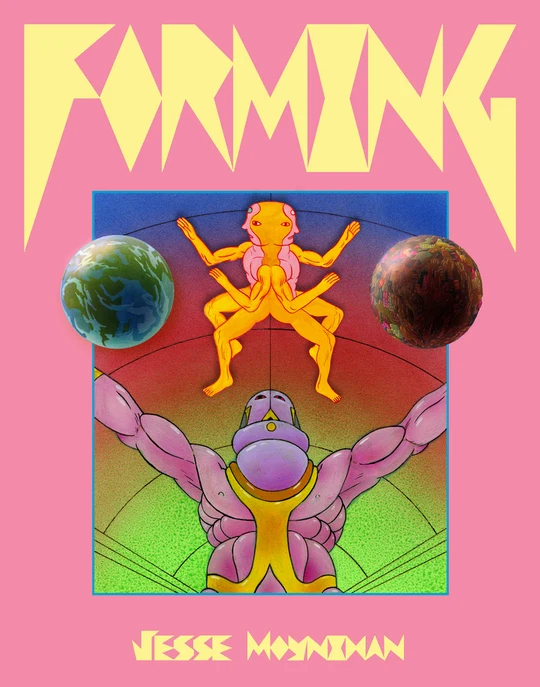
I love mythology. Stories of gods and goddesses, creation and destruction. It’s storytelling as a tool for deconstructing the complexities of the world around us and the very nature of reality. The stories can get truly absurd and I love them all the more for it. The Greeks, the Hindus, the Egyptians, and many Aboriginal cultures centered themselves around some truly strange stories that are absolutely amazing and could stand toe-to-toe with any of the best psychedelic stories of the last seventy years.
Comics have always felt like the perfect vehicle for exploring mythology. Just look at Jack Kirby and his New Gods epic from the 70’s. It was a big swing and aimed to tackle gigantic, operatic themes. It was very melodramatic and of its time. I kept thinking about a story Mark Evanier told about Jack Kirby in the afterword to the first one of the omnibus collections throughout my reading of Jesse Moynihan’s Forming:
Throughout his career, Kirby liked to innovate, not follow. His attitude was best summed up a few years later when he read that some new artist would be taking over Captain America and hoped “to do it in the Kirby tradition.”
Said Jack, “This kid doesn’t get it. The Kirby tradition is to make a new comic.
Not only do I think Jesse Moynihan more than “gets it” and has put together a truly original comic but I also think he may have created a new mythology for our time, much in the way that Kirby did before and Joseph Campbell did even earlier than that. Forming is a psychedelic amalgam of gods, demons, monsters, and angels that Moynihan culled from legends and religions from around the world and filtered through Moynihan’s idiosyncratic vision.
It’s hard to pin down the story that Forming tells. It crosses vast spans of time and space, flowing from Atlantis in 10,000 BC to strange planets and higher dimensions. It shows humanity emerging and evolving so that it can serve the nefarious purposes of a mining conglomerate while gods and higher beings bicker over problems that are both mundane and so significant that they could alter reality itself. Every summary I could possibly draft would be destroyed by the incandescent narrative bombast that Moynihan presents in these pages.
Moynihan has many storytelling influences that he proudly wears on his sleeve. I can see Jack Kirby, Moebius (especially his collaborations with Alejandro Jodorowsky), the indelible impression of his time working on Adventure Time, and even a bit of the Frank Santoro Correspondence School seeps into his 9 panel grid layouts but there’s also such more to it.. He has reassembled all of the bits and bobs of inspiration and mutated it into something that is truly all his own.
The art of Forming is just as frenetically glorious. Moynihan’s figures are dynamic and loose. It feels like they could burst from the pages at any second. The character designs are original and iconic. His use of colors and gradients, crafted by mediums like gauche and airbrush, are perfect and create an almost radioactive palette that raises the art to levels just as transcendent as the story it serves to tell. Even the hand-drawn lettering works to foster moods and character in ways that other books fail.
I think Forming is reverent in its irreverence. It may even be the point of the whole project. There is a conversation between the blobby headed demigod Nommo and a jet black troll without a face where they face off over how truly terrible the deity has been for his planet. The troll says, in reference to the creativity of the world:
You want this world where everyone’s a “deep” “philosophical” artist, so you shove it down our throats. Now every rando dipstick thinks they gotta speak in metaphors all the time. They can’t just enjoy some surface level shit.
It may have only been a brief scene out of many but it somehow felt like Moynihan’s thesis statement for why he approached the heady spirituality and metaphysics in the way he did. It’s confrontational and mischievous. Everyone speaks like they came directly out of an R-rated episode of Adventure Time. It both tackles and teases subjects that would otherwise be trapped in pedantic pomposity. It is magic in all of the ways that resonate and matter to me.
I’m not sure what vent of pure inspiration Jesse Moynihan was huffing while he channeled the twisted visions that inspired the writing and drawing of Forming but I hope he never kicks the habit. This book is a truly amazing feat and, with any luck, should hold a place for us when future societies wonder just what kind of things were rattling around in the fractured culture of our modern era.
Forming is available on October 6th and can be preordered from our friends over at Fantagraphics.
About Author


